
The God Complex
Religious Dogma and Doctrinal Control in Fundamentalist Muslims


Narcissus gazes into the sacred pool, spellbound by his own desire and imprisoned by his reflection. He remains immobile and motionless, with no desire for food or rest, consumed by the perfection of his appearance. Echo observes her muse, silenced and stripped of her voice. She is now condemned to repeat only his words, her identity weighted by his ego and reduced. She does not leave. She remains, endlessly mirroring the one who refused to hear her.
Elsewhere on Mount Olympus, Zeus reigns not through wisdom or merit, but through the demand for obedience. He takes the form of a bull, a swan, a storm—not for purpose or beauty, but for sexual control, forcing mortal women to his will under the guise of divinity.
These ancient Greek myths are mirrors of archetypes that echo within modern religious institutions. Within the fundamentalist crevices of religion, particularly Islam, one finds a face of Narcissus staring back, obsessed with a singular and unchallenged image. They find the voiceless and compliant Echo amongst the believers. They hear Zeus in the proclamations of those who conflate control with revelation.
Dogma is not a pathway of God—it is a fortress of the self. It is a way of guarding in fear of opposing or alternative thought, like Pentheus feared Dionysus. Those who inquire, those who critique, who learn from other wells, or who speak in a manner not approved by the clerical elite are written off as heretics. They are crucified by weapons of fatwas.
Within fundamentalist systems, dogma is fueled by religious narcissism. Belief becomes a mechanism to glorify preferred and strategic ideologies rather than a path to spirituality. Religious dogmatism, in this case, serves to preserve the authority of certain religious figures while simultaneously silencing dissent, and forcing conformity. It does not invite reflection or humility, it demands obedience, and any opposition is met with violence or isolation. This article will serve to address the persistent issue of dogmatic frameworks, narcissism, abuse, and toxicity within the Muslim community. It will undress these sentiments for what they truly are—a manipulation and distortion of religion in order to force individuals into submission and compliance. It will lay out the current institution’s shortcomings while highlighting the red flags, so that you can protect yourself.
What is Religious Narcissism?
Narcissism, generally, is characterized by a need for external admiration, inflated self-importance, and a lack of empathy for others. At its core, it is a defense mechanism, a way to protect a fragile and unstable ego with a grandiose identity. Religious narcissism is very similar, except in that it functions to serve the self, using religion and moral superiority as a way to gain control and power over others. Narcissists generally present themselves as devout, pure, and inherently right, thus making them superior to others who oppose their ideology. Below, I will list various characteristics identified by Psychology:
They adhere to dichotomous thinking—that is, categorizing individuals as inherently good or evil. Those who reaffirm the narcissist’s beliefs are good, and those who oppose it are evil.
They employ tribalistic tactics, showing prejudice towards other beliefs and ostracizing those who deviate. Specifically, they isolate individuals by mocking, belittling, and berating them. They wield shame as a weapon of control, especially toward women. This invokes fear in others, showing that if they too express opposition, they will be condemned.
This is a strong and common manipulation tactic. Humans have evolved to fear social rejection and have an intrinsic need for belonging. The cost of dissent is high, so we are willing to engage in cognitive dissonance and obey for the sake of being socially accepted.
They further reinforce this sense of tribalism and elitism by refusing to associate with individuals or groups they do not deem as devout.
They believe they have a superior or unique connection to God and to religion.
Not only do they demand praise and loyalty, they demand obedience. They desire blind submission to religious authority, especially themselves. Opposition and dissent is rejected and written off as blasphemous, and met with threats of abandonment and excommunication. Even questioning their viewpoint is profane. Any form of inquiry or disagreement is directly interpreted as a disagreement with God.
The more you question and critique, the more they write you off as disobedient and an enemy of the religion.
They seek out further means of proselytizing with public platforms, as private and small dominions are not sufficient.
Religious narcissists heavily emphasize maintaining public image and performance. They expect perfection at all times, agreeability in the face of all opinions, and contentment. Religious responsibilities become impossible to maintain due to excessive demands and strict rigidity—you must practice religion in the ways they expect you to. They grant zero grace, regardless of the circumstance.
To promote further segregation, they will selectively share information with those they deem as ‘pious’. They positively reinforce individuals and ideas that maintain their position of power.
They may weaponize their religious position for personal and financial benefit.
They engage in criminal misconduct or cover up the transgressions of those in the in-group. They cover up and dismiss sexual abuse, predatory behavior, physical abuse, felonies, and other crimes. Those who are on their righteous path are above the law.
Defense of immoral or illegal behavior is often seen on social media, with individuals such as Andrew Tate.
They specifically thrive in systems that resist change, engage in shame dissent, and idolize certainty.
You’re starting to connect the dots now, aren’t you?
What is Religious Dogmatism?
Dogmatism does not consist of faith itself, rather, the rigid attachment to beliefs as absolute and infallible truths, irrespective of evidence or opposing perspectives. It resists reinterpretation, not because it is incorrect, but because it does not serve the dogmatic framework. It suppresses dissent in order to protect power and control. And the cherry on top, it utilizes narcissistic abuse tactics, encouraging obedience over inquiry and understanding. Such a mindset reduces the complexity of spirituality to fixed commands, preventing nuance and promoting anti-intellectualism.
“Dogmatic beliefs offer a global worldview full of rules and explanations, and thereby reduce the complexity of life.” [Kossowksa et al.]
In an interesting article, Kossowska et al. discuss the implications and cognitive characteristics of dogmatic thinking in both orthodox and atheist beliefs. While it serves to dismantle the narrative that religiosity is associated with intolerance, and being non-religious is associated with tolerance, it provides meaningful insight into the dogmatism of religious individuals. Specifically, the authors identify the need for dogmatic frameworks as a psychological defense mechanism, where individuals and communities cling to rigid religious definitions not because they are logical or true, but because they are safe. Especially for those who experience intolerance of uncertainty, reducing nuance to black-and-white certainties is easier to digest than facing the challenge of truth. Such characteristics are closely associated with fundamentalist thinking—the excessively strict literal interpretation of scripture, dogma, and ideology. The authors highlight the concept of collective ego or identity, where shared absolutes bind individuals to a tribalistic group that is resistant to external challenge. It is further characterized by intolerance toward value-violating groups—simply put, religious people are selectively prejudiced towards those who make up the out-group. This out-group usually consists of those who pose a perceived threat to in-group security (such as gays, women, or people of color). Interestingly, individuals believe discrimination to be justified when volatile constituents of their ideology are threatened. This echo chamber mistakes conformity for truth and opposition as betrayal. Suppressing other forms of information or alternative perspectives is less about defending divine truth and more so about preserving the emotional architecture of the believer’s world.
The issue with religious dogmatism, especially when coupled with narcissistic abuse tactics, is that it mirrors key elements of fascist thinking. It exhibits authoritarian obedience, suppression of information, reinforcement of collective identity over individual autonomy, tribalistic division, and emotional abuse. Fascism holds contempt for democratic institutions and demonizes opposing domestic entities. Book burning and censorship, for example, are central tools of fascist regimes. Ibn Rushd, also known as Averroes, was a Muslim philosopher who defended secular thought, arguing that logic and religion do not contradict. He is a powerful symbol of conviction, with religious authorities burning his work and exiling him in order to maintain ideological purity. Overall, religious dogmatism and fascism both serve the same epistemic motives and strategic functions: preserving power through the control of information. It does not serve as theological truth, but as psychological strategy, placing the wielder on an untouchable pedestal.
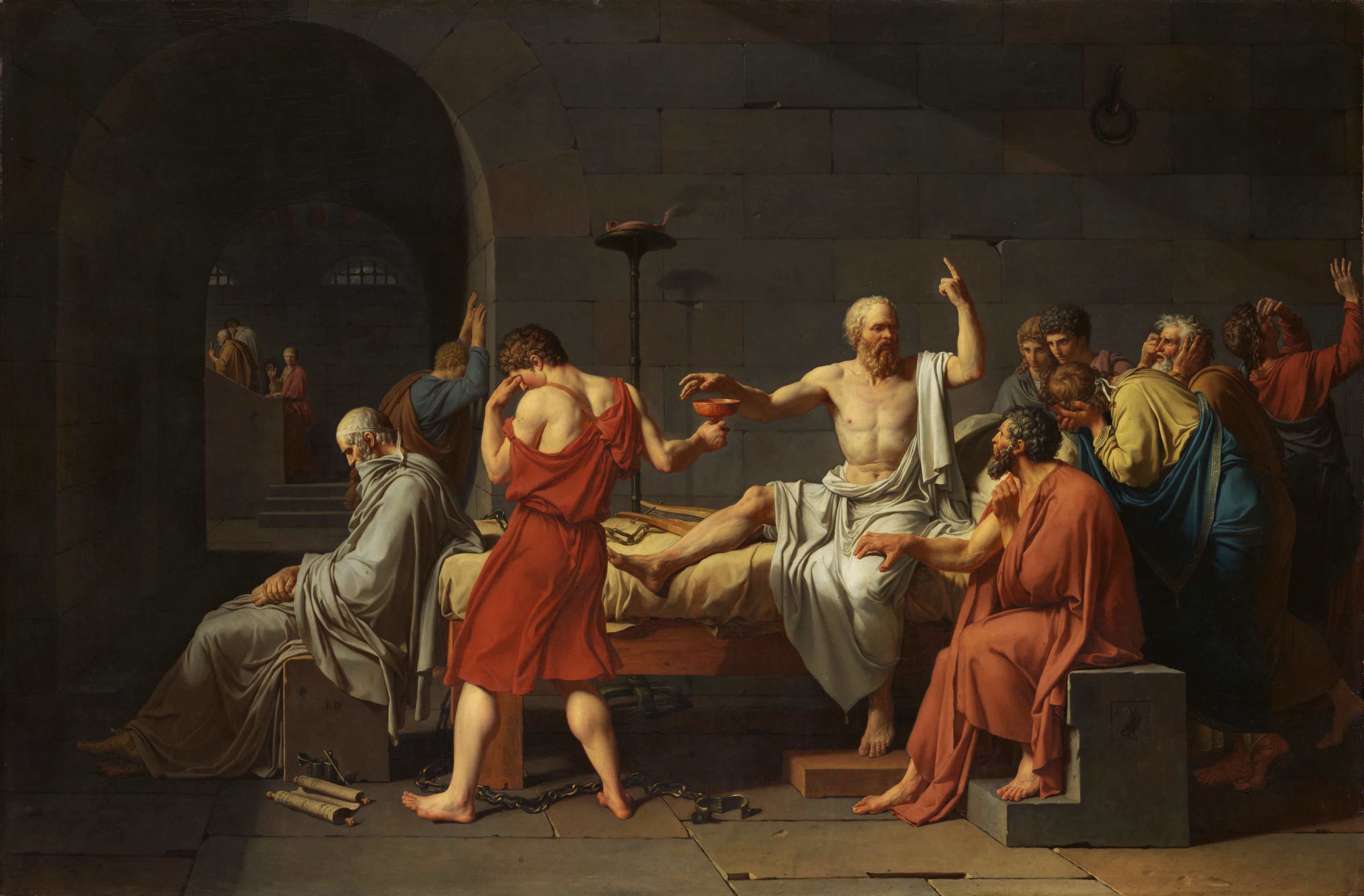
The Moral Collapse
Connection to Muslim Communities & Islam
The issue with contemporary fundamentalist Muslim communities is they refuse to acknowledge their shortcomings and failings, even amongst the scholars. They position religious figures as infallible and untouchable, despite every individual’s line of reasoning being subject to error or bias. They adhere to age old interpretations and rulings without critically assessing them. They reject science and philosophy, despite them being foundations to empiricism and logic.
While adhering to the interpretations of classical scholars is crucial to the preservation of Islam, that does not mean they are without fault. Caution and reinterpretation—specifically in regards to rulings, not Aqeedah or fundamental truths—is necessary. A lot needs to be fixed, there needs to be reform in how scholars assess things, in how speakers preach religion. Without confronting this reality, the community will continue to decay, crumbling beneath the rigid foundations of its dogma. Despite a rise in apostates and increasing disillusionment with the religion, Muslims turn their cheek, sweep things under the rug, and pretend all is well in fear that acknowledging problems might invite ridicule or tarnish Islam’s image. Yet ironically, their desperate and obsessive attempts to maintain a pristine perception has only caused mistrust and driven people away.
We must create space for critical inquiry—allowing individuals, especially those well-versed across disciplines (polymaths), to revisit classical texts and rulings with intellectual honesty. Only by welcoming difficult questions, even the uncomfortable ones, can we begin to preserve truth rather than just tradition. The reality is that classical scholars, despite their brilliance, could not have considered every caveat or circumstance. Even within the sciences this is not feasible, there is always new information to be considered and respective adjustments to be made. If contradictions arise or alternative perspectives emerge regarding Islamic jurisprudence, it should not be rejected because it is unfamiliar or challenges the norm. It should be assessed with integrity, measured by truth, coherence, and alignment with broader ethical spirit of the faith.
The moral failings of the community extend beyond academia and scholarship. The unwillingness of many scholars and preachers to exercise due diligence, to confront social issues with intellectual rigor and moral clarity, has trickled down to the average Muslim. Some Fatwas, often vague and lacking definitional precision, are rarely framed with the depth and coherence of logical proofs, allowing them to be misinterpreted and weaponized. Now, we are left with a fertile ground for moral inconsistency. Men justify secret second wives, sexualize the practice of polygyny while preaching restraint, and impose excessive standards of modesty they themselves fail to uphold. For example, discouraging women from occupying public spaces or platforms on the basis that they may cause ‘fitnah’, while ignoring the reality that men are equally as susceptible to it. Furthermore, they discourage women from pursuing an education or a career, convincing them their virtue lies in domesticity and sexual availability. Women are denied space in scholarly and political discourse, their voices suppressed or forced to echo. After all, are they not intellectually subordinate and half of a man?
Such discriminatory attitudes are not limited to women, but extend further toward other marginalized groups. Homophobia is natural and applauded, rather than welcoming nuance and compassion. People who identify as LGBT+ are ostracized and excommunicated, rather than encouraged to maintain a rope with Allah. The community frequently fails to recognize that it is possible to uphold the belief that certain actions are impermissible while simultaneously fostering an environment that invites, rather than alienates, those who struggle. Men who traffic women, commit adultery, or even murder are met with greater patience than someone who simply grapples with their desires.
Some even defend domestic abuse and child marriage. We even observe the defense of influencers such as IronFitCoaching, Mohammad Hijab, Andrew Tate, or Sneako. Moral transgressors, especially men, are protected instead of held accountable.
The responsibility to correct and dismantle these distortions lies with those who occupy positions of religious authority, but rather than confront, they remain silent out of fear of contradicting tradition. Either that, or they employ religious manipulation in order to convince others these things are normal.
When such sentiments and behaviors are allowed to persist unchecked, religion becomes a tool for control and ego. Hypocritical individuals amplify the harshest aspects of faith and ridicule others, not out of devotion, but to position themselves on a moral pedestal. Misogynists cloak their abuse in benevolent sexism, twisting scripture to coerce compliance, despite the fact that Islam—in its essence—does not sanction the oppression of women.
In the end, what corrodes the community—and by extension the religion—is not external criticism or cultural pressure. It is the internal rot of unchallenged authority, selective morality, and the narcissistic abuse of sacred tradition.
“And thus We made you a moderate nation…” (2:143)
“Do not exaggerate in your religion…” (4:171)
“Religion is what the Prophet and his companions were upon, and anything beyond that is from ghuluww.” [Ibn Taymiyyah, Majmūʿ al-Fatāwā, 10/427]
“The ghāliyah (extremists) are destroyed, for they made religion a tool for the self.” [Ibn Taymiyyah]
“The greatest veil between the servant and God is the narcissism of the soul in the guise of religion.” [Imam Ghazali, Iḥyāʾ, Kitāb al-Riyāʾ]
“How many are veiled from the truth not by sin, but by the illusion of righteousness.” [Imam Ghazali]

Ancient Skepticism
One cannot discuss dogma without also discussing skepticism, because what dogma fears most is not just rebellion, but the disruptive and calculated power of a question.
The word “skeptic” literally means investigation, and is derived from the Greek word skepsis. Ancient Skepticism is a school of thought from classical Greek philosophy, founded by Pyrrho of Elis. Drawing upon Pyrrho Skepticism and Academic Skepticism, it emphasizes withholding judgement and questioning the possibility of absolute certainty. Ancient Skeptics viewed assertions as expressions of dogmatism and avoided affirming anything without absolute certainty. In this tradition, suspending judgement is not weakness, it is wisdom and humility—a life without belief.
Fundamentalist Muslims vilify doubt because it is the gateway to skepticism, and skepticism invites inquiry. And if a belief system is built upon ego, obedience, or a brittle foundation, even a question is enough to make it crumble. Most individuals have not developed a deep and well defined philosophical framework. Their confidence is performative and simultaneously defensive—it is propped up cardboard illusioned as a fortress of certainty. And doubt is the wrecking ball. Fundamentalists hold philosophy in contempt, not because it is faulty or worthy of derisory, but because they fear its audacity to ask why.
Skepticism does not function against religion, it functions against religious control. Rather than demanding the repetition and inheritance of belief, it demands that beliefs are understood and earned. This philosophical tradition does not contradict Islam, as the Quran repeatedly asks: “Do you not reflect? Do you not reason?”. Even the earliest scholars debated consistently—it was the heartbeat of Islamic intellectual tradition, now reduced to deviation and heresy. Imam Al-Ghazali exhibited methodology that paralleled skepticism, doubting everything he had learned and breaking down his dogma before affirming Islam with certainty. In spite of his integrity, people abandon and even disparage such methods. Where fundamentalists are prisoners of their own pathologies, skepticism becomes a moral imperative.

Conclusion
Narcissus died not from the reflection itself, but from his refusal to look away—from his obsession with preserving a perfect image in spite of his body wasting. His death was a collapse inward, symbolizing selfishness and love without reciprocation. Echo faded not because she lacked conviction, but because she was denied a voice. Zeus cloaked domination in divinity, forcing obedience out of fear rather than reverence. These myths were never just stories; they were warnings, reflections of what happens when power is worshipped and image is prioritized over essence.
This article is not a critique of Islam, nor a challenge to the Quran. It is a critique of what we have become in our failure to embody it. Islam is a religion of balance, centrism, and justice, but these values have been buried under layers of dogma, authoritarianism, and ego. Throughout the east, Muslim communities have fallen into fundamentalism, conflating rigidity with righteousness and control with conviction. We are not progressing, we are regressing—and we have been for decades now. This is evident from the erosion of unity, silencing of inquiry, performative piety, and the shaming of dissenters.
People continue to perpetuate extremism in the name of Islam. They feel comfortable associating their hatred with the religion, while those who preach nuance, reform, and compassion are written off as deviant. This is not the Islam that preserved civilizations or fostered intellectuals.
If we are to mend, we must first be honest. We must acknowledge the narcissism and dogmatism that hides behind the face of Islam. We must allow revision and skepticism where it is necessary, and enforce stricter guidelines to protect our most vulnerable from harm disguised as tradition. We should refrain from belittling the intellectual contributions of philosophers, scientists, mathematicians, and feminists—many of whom ask the very questions that challenge stagnation and dogma. We must not bury truth and logic in fear that it may crumble our belief system. True conviction and faith is built upon intellectual honesty, not cognitive dissonance and mindless obedience. It is not threatened by truth or evidence, it is refined by it and flourishes with it. If faith cannot withstand a question, it was never anchored in truth to begin with.
Kossowska, M., Czernatowicz-Kukuczka, A., & Sekerdej, M. (2017). Many faces of dogmatism: Prejudice as a way of protecting certainty against value violators among dogmatic believers and atheists. British Journal of Psychology, 108(1), 127–147. https://doi.org/10.1111/bjop.12186
had to stop reading every few minutes to give a standing ovation
This is a well written and structured piece and raises some interesting points but I do see some irony in it that maybe wasn't intentional.
Look forward to reading the next one.